


Advanced Methane Emissions Studies for Biogas, RNG, Digesters, and Covered Lagoons
Turn Methane Loss Into Operational Intelligence

Interpolated maps show methane detection sources from 1 ppm-v to 100% methane. Click on any data point for an in-depth view of the area of concern.
Whether you operate an anaerobic digester, covered lagoon, wastewater treatment plant, food waste digester, or renewable natural gas (RNG) facility, every methane leak represents lost revenue, reduced system efficiency, increased greenhouse gas emissions, and potential regulatory risk.
Sniffer Robotics provides advanced methane emissions studies that help operators identify, quantify, and understand methane emissions across their entire operation. By combining the proprietary SnifferDRONE™, high-resolution methane detection system, state-of-the-art handheld equipment, and GIS-based analytics, we deliver actionable data that helps operators:
-
Locate fugitive methane emissions
-
Reduce product gas losses
-
Improve RNG production efficiency
-
Optimize digester and gas collection performance
-
Prioritize maintenance using real emissions data
-
Verify repairs with confidence
-
Support environmental reporting and sustainability initiatives
Rather than simply finding leaks, Sniffer Robotics provides the intelligence needed to improve operational performance while maximizing renewable energy recovery.
Our methane emissions studies are designed for virtually every type of biogas operation, including:
-
Dairy digesters
-
Livestock digesters
-
Food waste digesters
-
Industrial anaerobic digesters
-
Wastewater treatment plants
-
Covered lagoons
-
Renewable Natural Gas (RNG) upgrading facilities
-
Biogas processing plants
-
Gas collection piping
-
Compressors, blowers, valves, flanges, and process equipment
From biological gas production through pipeline injection, Sniffer Robotics helps operators understand where methane is escaping and where valuable product gas can be recovered.
Complete Methane Monitoring for Every Biogas Facility

Sniffer Technicians manually inspect, and tag, gas processing equipment.
Why Conduct a Methane Emissions Study?
.jpg)
The SnifferDRONE inspects digesters at a Wastewater Treatment Facility
Whether you operate an anaerobic digester, covered lagoon, wastewater treatment plant, food waste digester, or renewable natural gas (RNG) facility, every methane leak represents lost revenue, reduced system efficiency, increased greenhouse gas emissions, and potential regulatory risk.
Sniffer Robotics provides advanced methane emissions studies that help operators identify, quantify, and understand methane emissions across their entire operation. By combining the proprietary SnifferDRONE™, high-resolution methane detection system, state-of-the-art handheld equipment, and GIS-based analytics, we deliver actionable data that helps operators:
-
Locate fugitive methane emissions
-
Reduce product gas losses
-
Improve RNG production efficiency
-
Optimize digester and gas collection performance
-
Prioritize maintenance using real emissions data
-
Verify repairs with confidence
-
Support environmental reporting and sustainability initiatives
Rather than simply finding leaks, Sniffer Robotics provides the intelligence needed to improve operational performance while maximizing renewable energy recovery.
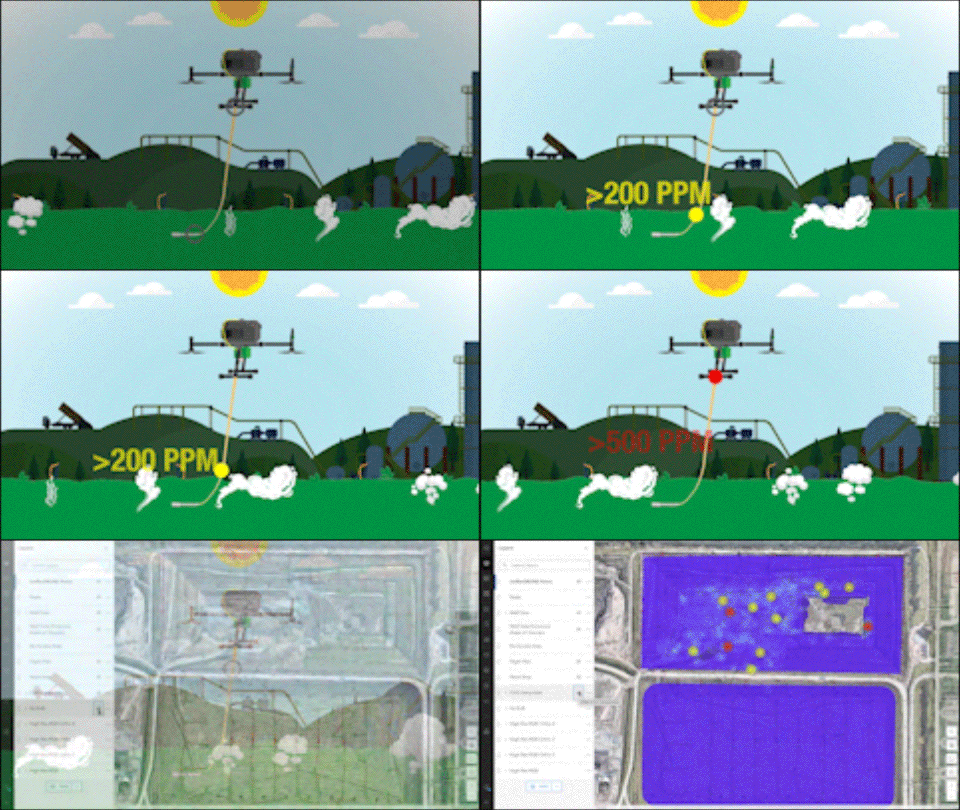
The SnifferDRONE™ collects thousands of methane measurements during every survey, creating high-resolution methane maps that show exactly where emissions originate.
Unlike conventional aerial methane sensors that measure methane high above a facility, the patented SnifferDRONE™ samples air only 2–4 inches above the surface using a flexible hose and weighted nozzle. This hyper-local sampling approach identifies methane at its source while minimizing atmospheric dilution, resulting in highly accurate leak localization.
Combined with SnifferVIEW™ GIS software, operators receive:
-
Full-color methane heat maps
-
Leak localization
-
GPS-tagged inspection data
-
ArcGIS-ready deliverables
-
Repair verification reports
-
Historical trend analysis
-
Cloud-based reporting
Instead of spreadsheets full of numbers, your team receives visual intelligence that makes maintenance decisions faster and easier.
Beyond Leak Detection—Methane Intelligence

By combining aerial inspections of anaerobic digesters with manual inspections of the processing skid, operators gain a comprehensive understanding of facility-wide methane emissions, helping prioritize maintenance, reduce product gas losses, and optimize gas production.
Positive Pressure Plant Inspections

Using state-of-the-art methane detection technologies, Sniffer technicians identify leaks and tag the location.
Methane losses don't stop at the digester.
Sniffer Robotics also performs comprehensive positive-pressure inspections throughout RNG and biogas facilities, including:
-
Valves
-
Flanges
-
Compressors
-
Blowers
-
Pressure relief devices
-
Process piping
-
Gas conditioning equipment
-
Upgrading systems
Each leak is photographed, GPS located, physically tagged when appropriate, and quantified in SCFM, allowing operators to estimate product loss and prioritize repairs based on financial impact rather than guesswork.
For biogas and RNG operators, methane emissions represent lost product, reduced efficiency, and avoidable environmental impact. Facility-wide quantification helps determine how much methane is escaping and provides a baseline for measuring the results of maintenance and operational improvements.
Sniffer Robotics works with Project Canary to convert high-resolution SnifferDRONE™ mapping data into a facility-wide methane emissions rate using flux plane analysis.
This analysis helps biogas and RNG operators:
-
Quantify methane and product-gas losses
-
Estimate the financial impact of emissions
-
Prioritize repairs based on emissions magnitude
-
Evaluate digester, lagoon, and processing-system performance
-
Verify improvements following maintenance
-
Track emissions performance over time
-
Learn About Methane Emissions Quantification
Comprehensive Facility Methane Quantification

Pictured above is a a flux plane analysis in kg/hr along with a wind rose view showing hyperlocal wind velocities based on data sampled from the SnifferDRONE.

Why Operators Choose Sniffer Robotics
Operators choose Sniffer Robotics because they need more than leak detection—they need actionable methane intelligence.
Our technology helps facilities:
-
Recover more saleable gas
-
Improve renewable natural gas production
-
Reduce methane emissions
-
Increase operational efficiency
-
Improve worker safety
-
Make data-driven maintenance decisions
-
Prepare for evolving methane regulations
-
Demonstrate environmental stewardship
Whether you're managing a single digester or multiple RNG facilities across North America, Sniffer Robotics delivers the high-resolution methane data needed to maximize performance while reducing emissions.