


Advanced Methane Emissions Studies for Landfills and RNG Optimization
Smarter Landfill Emissions Detection Starts with Better Data
More insights.
Fewer rechecks.
Confidential data.
Sniffer Robotics helps landfill operators identify, quantify, and manage methane emissions through advanced landfill emissions studies and methane monitoring services. Using high-resolution methane mapping and the proprietary SnifferDRONE™ UAV platform, operators gain actionable insights into fugitive methane emissions, landfill gas collection system performance, and potential odor sources across the site.
Understanding how methane moves throughout a landfill is essential for optimizing gas collection efficiency, reducing emissions, minimizing odor complaints, and maximizing renewable natural gas (RNG) recovery.
Sniffer Robotics' landfill emissions studies provide detailed methane detection, emissions mapping, and methane quantification data that help operators identify underperforming areas, prioritize corrective actions, and make informed operational decisions.
Unlike most compliance-driven surface emissions monitoring programs, landfill emissions studies offer a proactive approach to understanding site conditions and improving landfill gas collection performance. By identifying methane hotspots, evaluating collection system effectiveness, and tracking emissions trends over time, operators can reduce fugitive methane emissions, improve environmental performance, and prepare confidently for future regulatory requirements.


Interpolated methane map combined with a wellfield visualization helps pinpoint vacuum loss at the header.
Examples of full-color visualizations generated from SnifferDRONE data
Unlike compliance monitoring, emissions studies can be conducted independently and confidentially, giving landfill operators full control over how data is collected, analyzed, and used. These studies are specifically designed to support operational improvements and preparation for future compliance checks.
Sniffer Robotics emissions measurement allows operators to:
-
Collect methane data at tighter path spacing than regulatory surveys
-
Quantify total methane emissions with advanced flux plane analysis
-
Identify trends, recurring hotspots, and underperforming areas
-
Use insights internally without triggering regulatory reporting
This approach creates a clearer picture of landfill gas performance and supports smarter planning before compliance monitoring begins.
Emissions Studies Designed for Better Outcomes

Interpolated maps show methane emission sources from 1 ppm-v to 100% methane
High-Resolution Surface Emissions Monitoring

Automated flight plans are generated and accurately executed during each inspection
Our robotic systems perform consistent, repeatable surface emissions monitoring across active and closed landfills. By flying or driving tighter survey patterns, Sniffer Robotics captures significantly more methane data than traditional methods.
The result is actionable intelligence that helps operators:
-
Optimize gas collection and cover systems
-
Address small leaks before they become larger issues
-
Convert fugitive emissions into flux rate calculations
-
Reduce the likelihood of rechecks during compliance surveys
-
Improve confidence going into regulatory inspections
Better data leads to better preparation—and fewer surprises.
Tighter Path Spacing = Greater Insights

Data collected from the Petrolia study demonstrates how performing voluntary methane emissions studies at tighter path spacing offers landfill operators more practical insights by discovering more leaks than traditional compliance monitoring while identifying leaks below 200 parts per million to address minor issues before they become major issues.
For Renewable Natural Gas (RNG) operators, landfill emissions are an opportunity for significant return on investment. A properly executed landfill emissions study reveals where recoverable methane is escaping, where collection systems underperform, and where future wellfields will deliver the highest return.
When planning new wellfields or system expansions, assumptions are expensive. Emissions studies provide ground-truth intelligence that de-risks design decisions.
Sniffer data supports:
-
Optimal well placement and spacing
-
Identification of high-productivity waste zones
-
Prioritization of drilling where methane yield will be highest
-
Avoidance of low-return or over-collected areas
-
Methane Quantification for Total SCFM Forecasting and System Design
Sniffer Robotics delivers high-resolution, automated emissions data that helps RNG operators increase throughput today and design higher-performing wellfields tomorrow.
Emissions studies performed before, during, and after installation of a gas collection and control system helped this operator optimize their system design to maximize RNG production.

Design Better Wellfields with Real Emissions Data and Quantification
Find More Gas.
Move More Gas.
Design Smarter Systems.
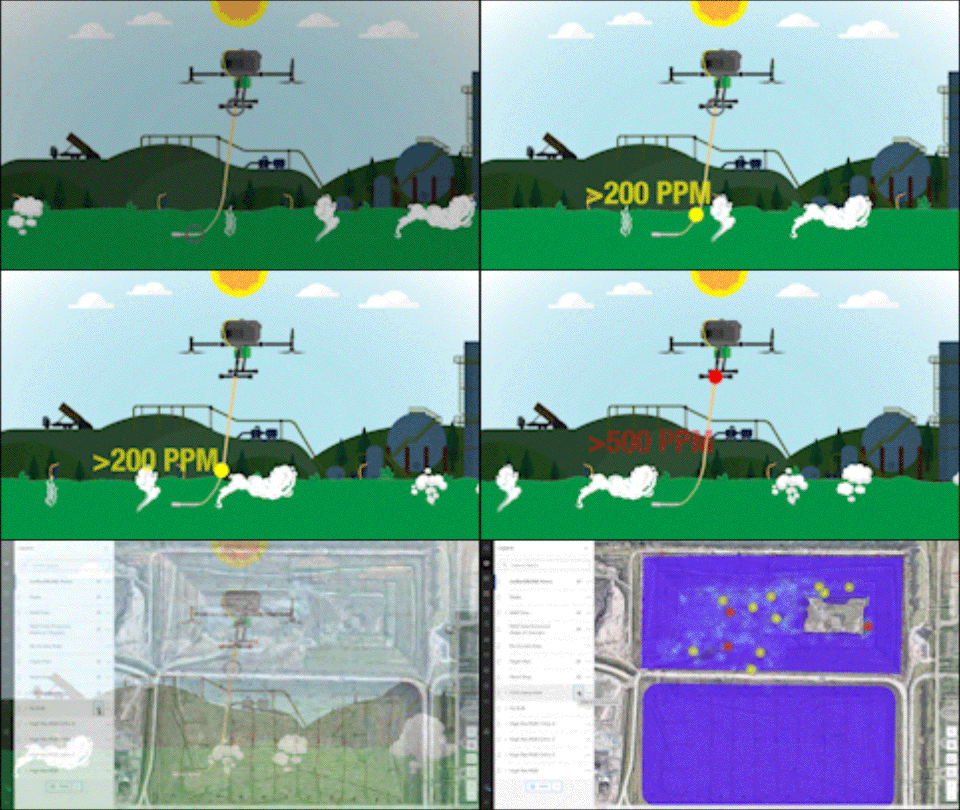
Find Recoverable Gas Before It Escapes
Methane doesn’t always move where models predict. Emissions mapping shows actual gas behavior at the surface, not just theoretical capture zones.
With Sniffer Robotics, RNG operators gain:
-
Surface-level methane concentration mapping
-
Full methane emissions quantification using flux plane analysis
-
Clear visibility into where gas is bypassing the collection network
The result: faster identification of high-value recovery zones and reduced guesswork in system optimization.
Finding individual methane sources is only part of understanding landfill performance. Facility-wide methane quantification helps operators estimate total emissions, evaluate gas collection and control system performance, prioritize high-impact repairs, and identify opportunities to recover more landfill gas for beneficial use or RNG production.
Sniffer Robotics partners with Project Canary to convert high-resolution SnifferDRONE mapping data into a facility-wide methane emissions rate using flux plane analysis.
This analysis helps landfill operators:
-
Estimate total site methane emissions (kg/hr)
-
Evaluate GCCS capture performance
-
Identify recoverable landfill gas
-
Prioritize cover, wellfield, and collection-system improvements
-
Measure changes following repairs or system upgrades
-
Support emissions reporting and reduction initiatives
Learn About Methane Emissions Quantification
Quantify Total Landfill Methane Emissions

Pictured above is a a flux-plane analysis in kg/hr along with a wind rose view showing hyperlocal wind velocities based on data sampled from the SnifferDRONE.

Prepare Better for Compliance with Actionable Data
Conducting emissions studies separately from compliance monitoring allows landfill operators to enter required surveys better prepared. With confidential, high-density methane data in hand, operators can address issues in advance—reducing the risk of exceedances, repeat inspections, and unnecessary operational disruptions.
Sniffer Robotics helps landfill operators move from reactive monitoring to proactive emissions management.
For More Information, Read the article: Landfill Methane Monitoring: Compliance vs. Performance (and How to Win at Both)
Regular emissions studies are one of the most effective ways to reduce fugitive emissions and control landfill odors. By identifying methane leaks early, operators can take targeted corrective actions that improve gas capture and minimize off-site impacts.
Many landfills perform routine emissions studies to:
-
Reduce odor complaints from neighbors and surrounding communities
-
Demonstrate proactive environmental stewardship
-
Improve relationships with local stakeholders
-
Maintain smoother day-to-day operations
Odor control is not just a regulatory concern—it’s a community and reputation priority.
Reducing Fugitive Emissions and Odors

Turn Emissions Intelligence into RNG Revenue
Sniffer Robotics combines autonomous methane detection with powerful GIS analytics to deliver actionable insights—not just data.
Our landfill emissions studies help RNG operators:
-
Increase gas throughput
-
Improve collection efficiency
-
Reduce system losses
-
Optimize capital deployment
-
Maximize methane recovery over the life of the asset
Whether you’re optimizing an existing landfill gas system or designing your next wellfield, Sniffer Robotics gives you the emissions intelligence needed to capture more methane and generate more RNG.
Contact Sniffer Robotics to schedule a landfill emissions study.